
The Art of the Shameless Clone: How Three Brothers Turned Copy-Pasting into a $12 Billion Empire
In the world of entrepreneurship, we are often told that innovation is the only way to survive. We are told to be visionaries, to build things the world has never seen. But what if that is a lie? What if the fastest way to success is not a new idea, but a better execution of a proven one?
Whenever people ask me how to build a product for the global market when they have no direction or ideas, I give them a simple answer: find a product in a massive category and either clone it or deconstruct it. If the original makes ten million dollars, is it such a bad thing for you to make a hundred thousand?
The story of the Samwer brothers is perhaps the most successful and controversial example of this "copy-as-a-strategy" approach.
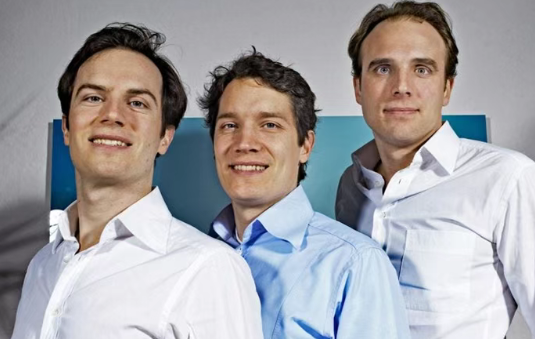
Marc, Oliver, and Alexander Samwer grew up in a comfortable lawyer’s family in Cologne, Germany. They were gifted with intelligence and a ruthless sense of timing. They became infamous for one thing: finding successful American internet companies and cloning them with surgical precision. Their strategy was as simple as it was effective. They identified winning US startups, precisely copied their models, and executed with absolute decisiveness.

The story truly began in the late nineties. After graduating from top business schools, the brothers moved to Silicon Valley and saw the rise of eBay. They were convinced that eBay’s success could be replicated in Germany. They spotted a gap in the market because eBay had not yet expanded internationally.
They moved to Berlin, hired three university friends, and founded Alando. One of their partners was a twenty-five-year-old CFO who had only worked at McKinsey for two months. He was the only one with corporate experience. They directly copied eBay’s core features, from the seller listings to the payment flows.
Alando launched on March 1, 1999. Within a month, the site had three million page views. In less than one hundred days, it became the number one auction site in Germany. On May 17, Goldman Sachs called to say eBay was interested. Just days later, the founder of eBay flew to Berlin. Only ninety days after founding the company, these six young men in their twenties sold Alando to eBay for forty-three million dollars. As an eBay executive noted at the time, they were completely atypical for the German internet scene.

This was not a lucky break; it was a masterclass in entrepreneurship. The brothers realized that Alando’s success came from a specific formula: identifying a profitable model, promoting it aggressively through television and print ads, and moving fast to occupy the market before the original giants arrived.
After Alando, their confidence was sky-high. They developed a repeatable framework that they would use for the next decade. First, identify a high-growth internet company. Second, study exactly how their code and features work. Third, launch the same brand in a new territory. Fourth, use aggressive marketing to scale. Finally, sell the company back to the very player they were imitating.
They built a factory of clones. They created Jamba! as a mobile content provider and sold it for two hundred million dollars. They built Zalando, a copy of Zappos, which eventually went public with a multi-billion dollar valuation. They created CityDeal to mirror Groupon and sold it back to them in just five months. They even cloned YouTube, Airbnb, Stripe, and Uber. Their most famous move in the East was Lazada, an Amazon replica that Alibaba eventually bought for billions.

In 2007, they founded Rocket Internet, a startup studio that turned cloning into an industrial process. They hired young, hungry business developers and coders who lived by a simple motto: speed over perfection. They hired fast learners rather than expensive experts and focused on growth at any cost. By 2014, they had thirty thousand employees and a valuation of over six billion dollars.
Whether you find their methods inspiring or distasteful, the lessons they offer for the independent entrepreneur are clear. Speed is often more important than being perfect. Strong execution is the only way to occupy a market. Scaling creates its own opportunities by attracting talent and capital. Even when copying, you must be smart enough to localize and adapt.
The Samwer brothers proved that in the race of entrepreneurship, you don't always need to be the architect of the original blueprint. Sometimes, the winner is simply the one who builds the house first.
Would you like me to help you draft a specific "cloning and localization" plan for a niche market you are currently considering?