
Indian Coder’s Growth Hack: 0 Marketing, 50 Free Tools, $13k MRR
How can a programmer who hates marketing earn $13,000 per month?
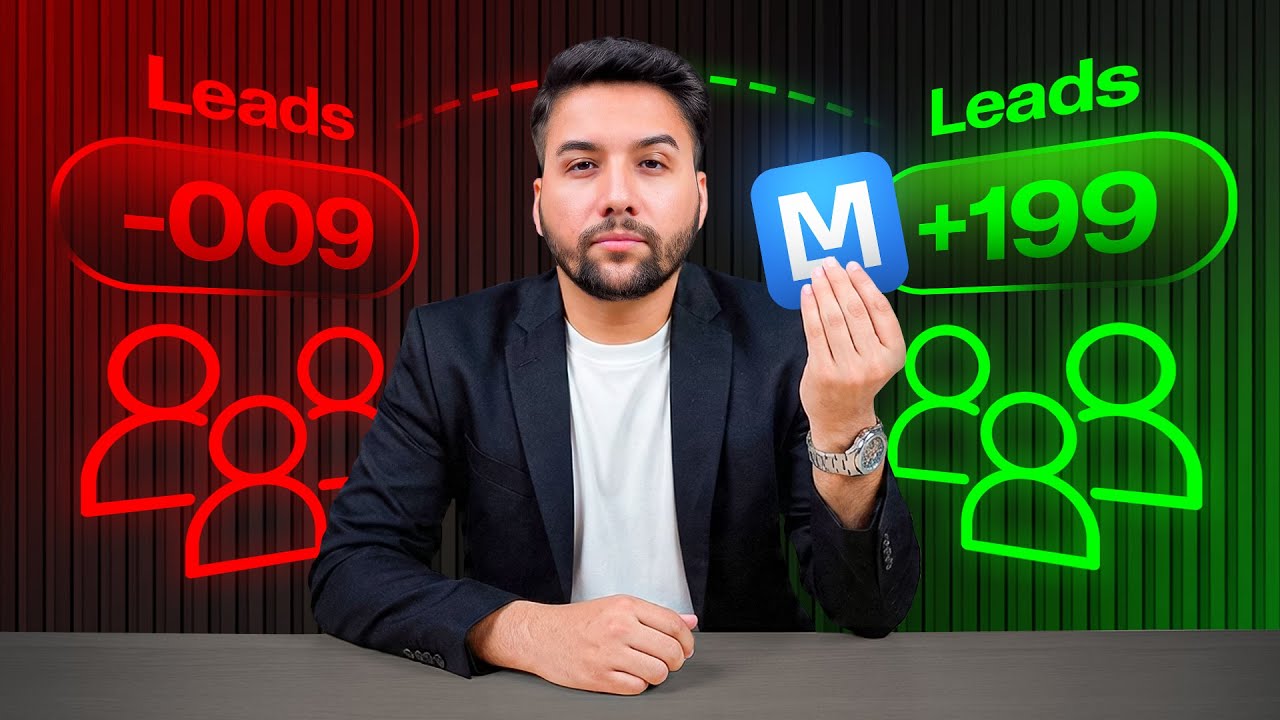
"I'm a builder, not a marketer." This is how Indian programmer Bhanu describes himself. Yet, this tech geek has managed to grow his SaaS product, SiteGPT, to a monthly revenue of $13,000, with cumulative earnings exceeding $500,000.

Even more amazing is the amount he spent on marketing: zero dollars. He didn't run ads, hire sales staff, or engage in traditional content marketing. He rarely even updated social media. He solved the marketing problem the only way a developer knows how: by writing code.
Bhanu's story began with a sense of restlessness. After graduating, he joined a large startup in India as a coder. It seemed like a promising career, but after eight months, he realized it wasn't the life he wanted. "This is not what I want," he told himself.
He quit his job, moved back in with his parents, and started working on his own products. His goal was simple: cut all expenses and focus on getting things done. His first product, a blogging tool called Feather, eventually reached a steady income of $5,000 per month.
When the AI boom hit in early 2023, Bhanu spent a weekend researching GPT. As a programmer, his way of learning is always "learning by doing." He wanted to build something for Feather's 100 clients—a small tool that enabled AI to read blog content and answer visitors' questions.
While working, he had an epiphany: "Wait, this shouldn't only serve 100 people." He spun the feature off, named it SiteGPT, and launched an MVP in just two weeks.
The results were shocking. SiteGPT achieved $10,000 in monthly revenue in its very first month. Feather had taken years to reach $6,000, but this new product exceeded $10,000 in a fortnight. Bhanu made the bold decision to sell Feather for $250,000 and go full-time on SiteGPT.

Today, SiteGPT’s monthly revenue has stabilized at $13,000. His secret weapon? A fleet of 50 free tools.
Opening Bhanu's Google Analytics reveals astonishing data. He sees 50,000 monthly visitors, with 70% coming from Google organic search. 90% of that traffic comes specifically from the free tools he developed, such as PDF-to-Markdown converters and AI chatbot naming tools.
With AI assistance, he now creates a new tool in just five minutes. He simply tells Cursor, his AI programming assistant, to look at existing tools and generate a new one for specific keywords following the same pattern. This is how programmers market: they use code to automate customer acquisition.
The conversion funnel is clear. Those 50,000 visitors turn into 200 leads, 60 trials, and eventually around 20 paying customers. While the conversion rate isn't high, the massive base of free traffic makes it work.
The key is a well-designed Call to Action (CTA) beneath each tool. If a user chats with a PDF, they see a prompt: "What if you could create a chatbot with all your business content? Try SiteGPT." The transition from free utility to paid product feels entirely natural.
For those wanting to replicate this, the process follows a seven-step guide. It starts with massive keyword scraping using tools like Ahrefs to find terms like "AI generator" or "AI builder."
He targets keywords with low competition (Difficulty ≤ 10) but sufficient search volume (≥ 1000/month). He builds a library of these terms and creates a corresponding free tool for each, ensuring the CTA leads naturally back to his core product.
Bhanu prioritizes tools that are easy to develop but highly relevant. By using AI coding assistants, the actual development time for these "marketing" assets is negligible.
His technology stack is equally lean. He uses Ahrefs for SEO, Bento for email, and his own SiteGPT for customer service. He relies on Cursor for development and PostHog for data analysis. The goal is to use SaaS tools to reduce maintenance while keeping costs at a minimum.
Does this strategy suit you? It is perfect if you have technical knowledge but hate traditional marketing, and if you have the patience for SEO to grow. It is less suitable if you lack technical skills or need immediate, overnight results.
Bhanu’s secret can be summarized in one sentence: "Don't spend months perfecting the product; release the core features first and let user feedback guide the way."
Act quickly, stay user-driven, and solve problems with technology. Not everyone is good at sales or social media, but if you can write code, you have a superpower. Use it to solve your marketing problems rather than forcing yourself to learn things that don't fit your nature.
Will you try this method? What free tools could you split out from your current project? Let's communicate and spark some new ideas.
Would you like me to help you identify specific keywords or brainstorm small tool ideas based on your current project?