How a 14-Page App Makes $700,000 Monthly: The Power of AI Arbitrage
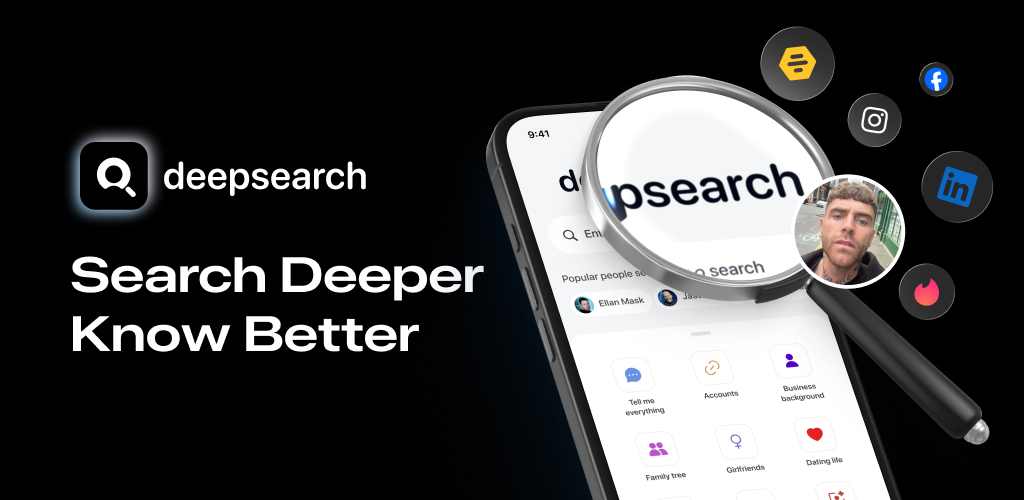
An AI application called Deep Search is currently generating $700,000 per month. I spent an entire day dissecting every detail of this app, and frankly, the simplicity of its success is staggering.
You might wonder how complex a million-dollar app needs to be. The entire product consists of just 14 pages—two of which are merely the user agreement and privacy policy. The onboarding process takes only four steps. Technically speaking, it is essentially a polished wrapper for ChatGPT and Perplexity.
That is it. But after digging into its marketing strategy, paywall design, and viral mechanics, I realized a harsh truth of the mobile world: success is 95% marketing and 5% technology.

Opening Deep Search reveals a functional simplicity that borders on the ridiculous. You enter a person’s name, the AI searches for public information, displays the results, and you're done. Perplexity can do all of this for free: photos, social media accounts, resumes, and news reports. Deep Search has no proprietary model or exclusive data. It is a "skin" product. Yet, it earns millions because of one thing: positioning.
Deep Search doesn’t sell "AI search"; it sells "secrets." Instead of saying, "We offer AI search services," they tell users, "Before your next date, look them up on Deep Search." By moving the tool into a specific, high-stakes scenario, the value proposition changes entirely.
They target three sensitive human pain points. First is trust anxiety: "Don't date them until you've checked them out." Second is social curiosity: "I searched my boyfriend on Deep Search, and you won't believe what I found." Third is FOMO: "This app is already restricted in three states; don't wait until it's too late." This isn't a search tool; it's a detective agency for the modern ego.
Their advertising strategy is equally aggressive. The Facebook Ad Library shows over 700 active paid ads running simultaneously across multiple languages. No one runs 700 losing ads. Each one is profitable. The ads are low-budget but high-impact: a shocked girl looking at her phone, a voiceover claiming the app is being banned, or scrolling text warning you not to get married without a background check.
Beyond paid ads, the app thrives on organic content. On TikTok and Instagram, users post videos claiming to have "found out the truth" about people they know. Deep Search provides the perfect script: spark curiosity, create suspense, and lead to action. The product itself becomes the conversation.
The onboarding process is a sprint. While most apps bore users with feature tours and surveys, Deep Search gets you to the paywall in under ten seconds. They use a "soft paywall" strategy. You can skip it and get one or two free searches, but the moment you want more, you hit a limit. By then, the value has been demonstrated, and the psychological barrier to paying has been lowered.
Their pricing is a textbook psychological trap. They offer a $2 seven-day trial. It’s the price of a coffee—too low to trigger any defensive "is this too expensive?" thoughts. But after those seven days, it automatically renews at $6.99 per week. If a user forgets to cancel, they end up paying nearly $30 a month. Those who think they are being "rational" might choose the $39.99 annual fee, feeling they've snagged a bargain. Either way, the app wins.
The cost structure is incredibly lean. An app making $700,000 a month likely requires only a handful of people. API fees are paid as you go, servers are scalable, and marketing—while expensive—is self-funding because the ROI is positive. There are no massive offices, no research teams, and no complex infrastructure.
The core takeaway is that in the mobile app space, technology is rarely the moat. The real defense is built through positioning—turning a general tool into a vertical solution—and the ability to scale marketing. The formula is simple: take a mature tool, re-position it toward an emotional pain point, simplify the product, and market relentlessly.
This success looks "easy," but it is a simplicity born of deep insight. It requires the courage to cut features and a profound understanding of user psychology. In this era, the most profitable products aren't always the most complex; they are the most focused.